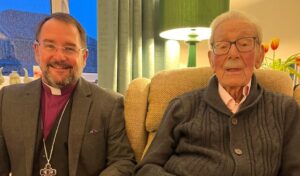
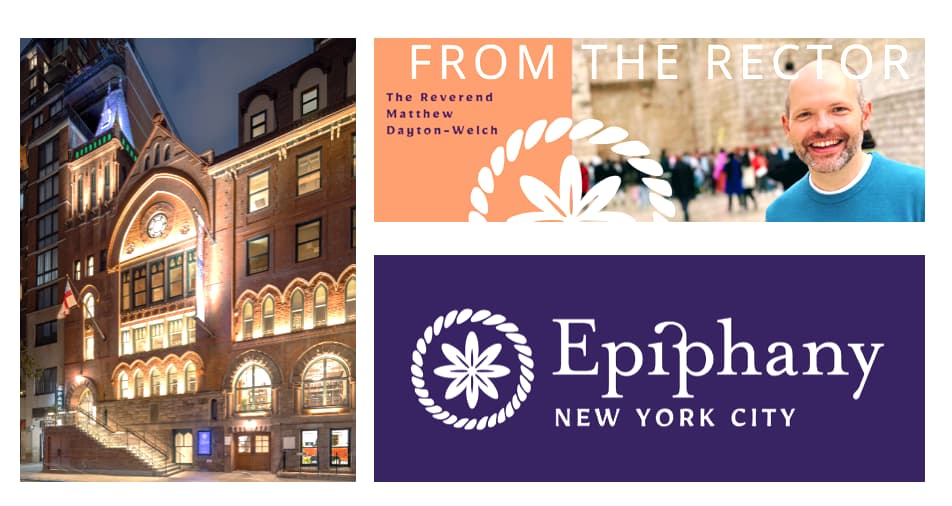
The Right Reverend Matthew Dayton-Welch, Rector of the Episcopal Church of the Epiphany in New York, has circulated a reflection on the current conflict in the region–and childhood memories of life and worship in Dubai
Dear Pilgrims,
When I was in high school, my family and I lived in Dubai. It was the late 1990s, and Dubai was in an exciting season. There were new hotels, new beach resorts, new international events. Dubai was putting its name on the map.
All of it, of course, was being built by foreign workers, most from South Asia. Their communities were vibrant also but extremely poor. They were afforded so few opportunities for rest, and they did not get to enjoy the city as we did. They were too busy running it.
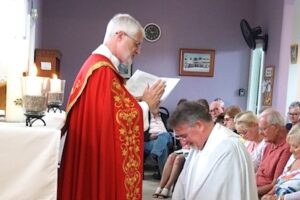
Looking back, I appreciate how much my folks made sure our world and theirs overlapped. We didn’t shelter ourselves from that poverty; we wanted to understand it. No place brought us together quite like Trinity Church, the Anglican (Episcopal) parish in Dubai. The liturgy was spoken in English and presided by British clergy; the congregants were nearly entirely South Asian. We would leave in our air-conditioned jeep, and from the window I would see most of them walk miles in the heat, often to work–but for a moment, the church connected us as the Body of Christ, all God’s beloved.
I have been returning to those memories since the war began. Those migrant communities are most at risk in those Gulf States–and according to the New York Times, are incurring the vast majority of fatalities there. Those now dead were the breadwinners in their families, sending money they earn back home; their deaths beget both emotional and financial damage.
Several hours west, in Palestine, we see a similar story unfolding. Bomb shelters are common place in Jerusalem but only in Israeli neighborhoods; the city does not require them in Palestinian communities. The same goes for the occupied West Bank. A dear friend of mine in a Palestinian neighborhood in southern Jerusalem keeps me updated on the emotional toll the war takes on her and her small son. When the sirens go off, they know that unlike their neighbors, they have no place to hide.
War is executed by politicians in safe spaces. King George didn’t visit the front lines in Brooklyn or Boston; Putin stays close to his gilded Kremlin halls. Our president initiated this war and still managed to attend a fundraiser at his beach resort, all within the same day.
War is executed by politicians in safe spaces, but it is the most vulnerable who pay the price. History will no doubt frame this war in geo-political terms–Israel and the US against Iran–but I increasingly hold it as a war of choice between the powerful and the vulnerable. Perhaps that’s how we should consider all wars.
For us as the Church, this idea gets us somewhere. Wars drawn on geopolitical lines confound the Church because the Body of Christ is a global thing. When we frame it instead in the context of powerful versus the vulnerable, we hear echoes of Jesus who stood on a hillside in the Galilee and said, “Blessed are the poor, blessed are the meek, blessed are the peacemakers, blessed are those who mourn.”
With those words in our minds, the Church finds its response. The Bishop of the Diocese of Cyprus and the Gulf, the Right Reverend Sean Semple, this month said, “Almost all of the churches of the diocese are in cities targeted by drone and missile attacks. Clergy and parish councils have shown true leadership in adapting quickly to meet spiritual and practical needs in dangerous and uncertain times. All of our parishes from Iraq to Cyprus are maintaining contact with parishioners, checking on their well-being, and providing pastoral support. At a time of crisis, ensuring people know that they are not alone and are cared for is vital work.”
I serve on the board of the American Friends of the Diocese of Cyprus and the Gulf; if you’d like to contribute to the Church’s response and support those migrant communities in the Gulf, please donate below: select “General Offerings” and note “GULF” in the memo line.
And pray for churches like Trinity Dubai that bring together the Body of Christ across nationality and income and language in order to serve and heal. They are living testaments to the love of Christ which knows no borders.
So are we.
Matthew+