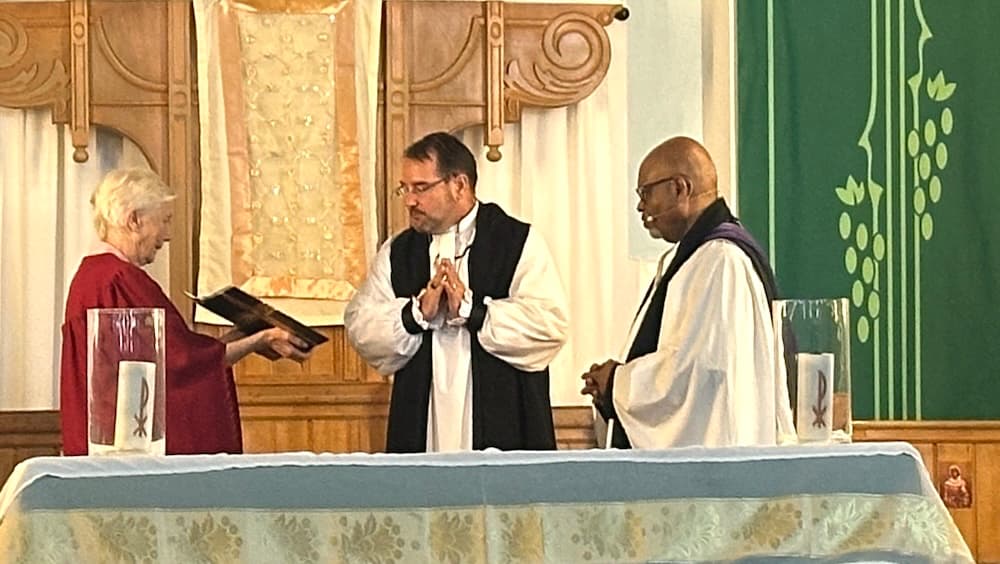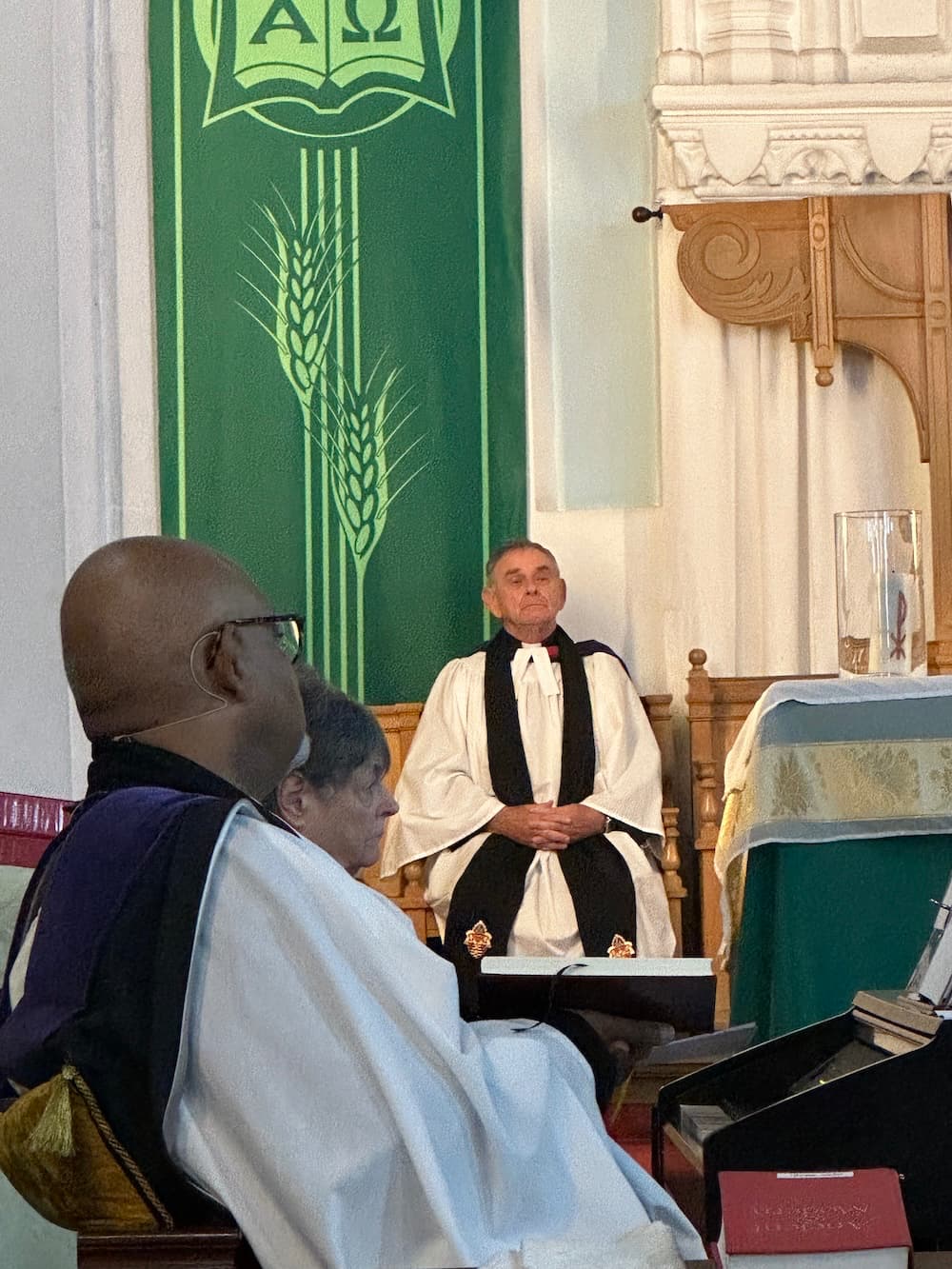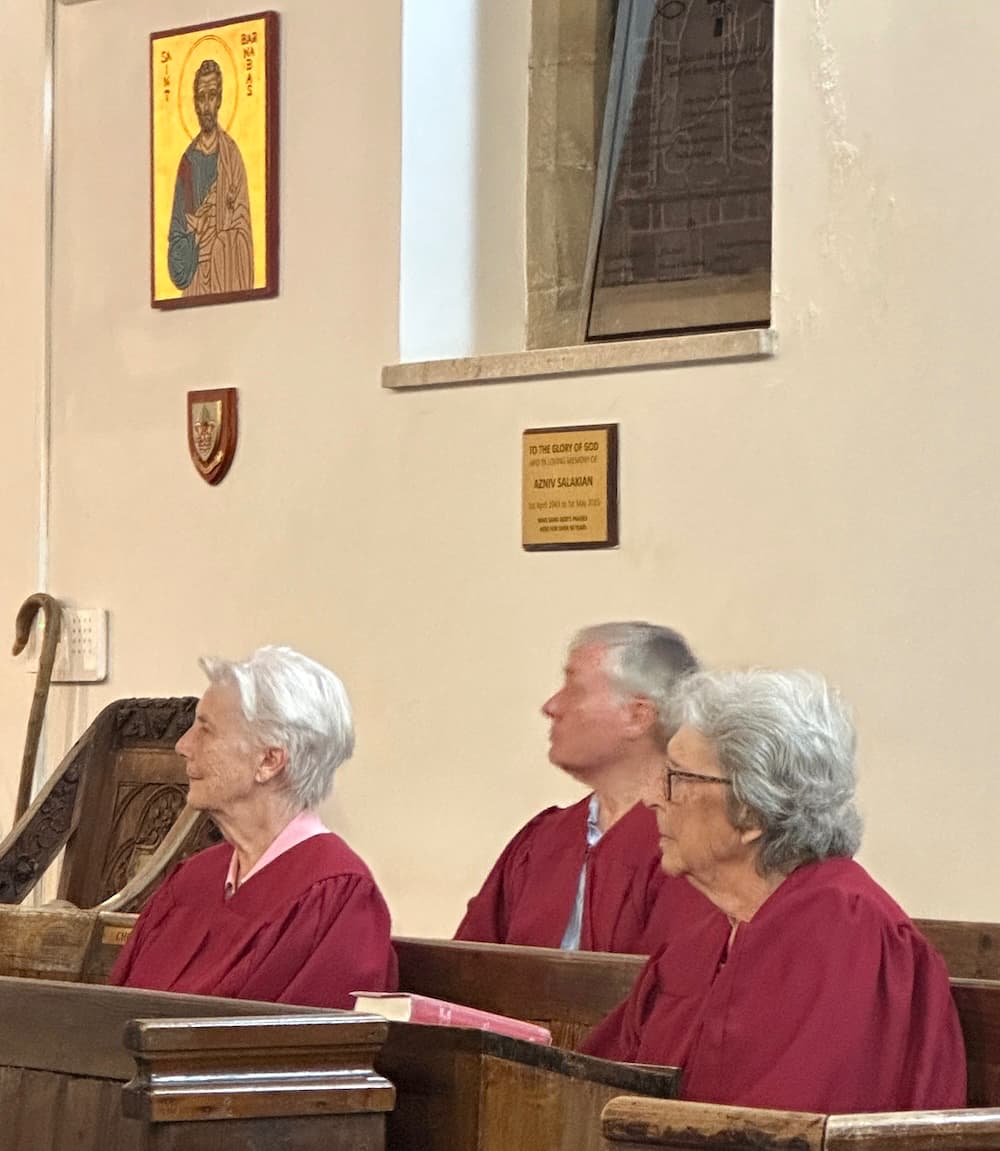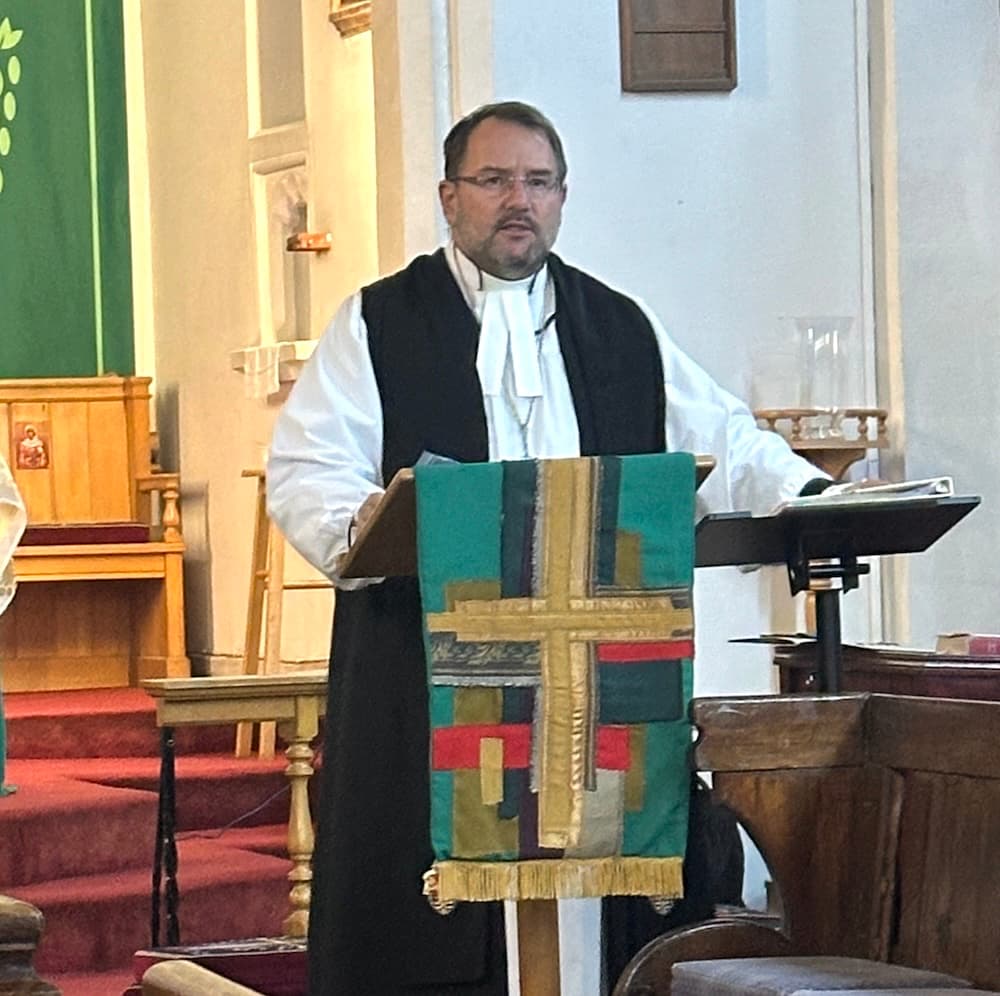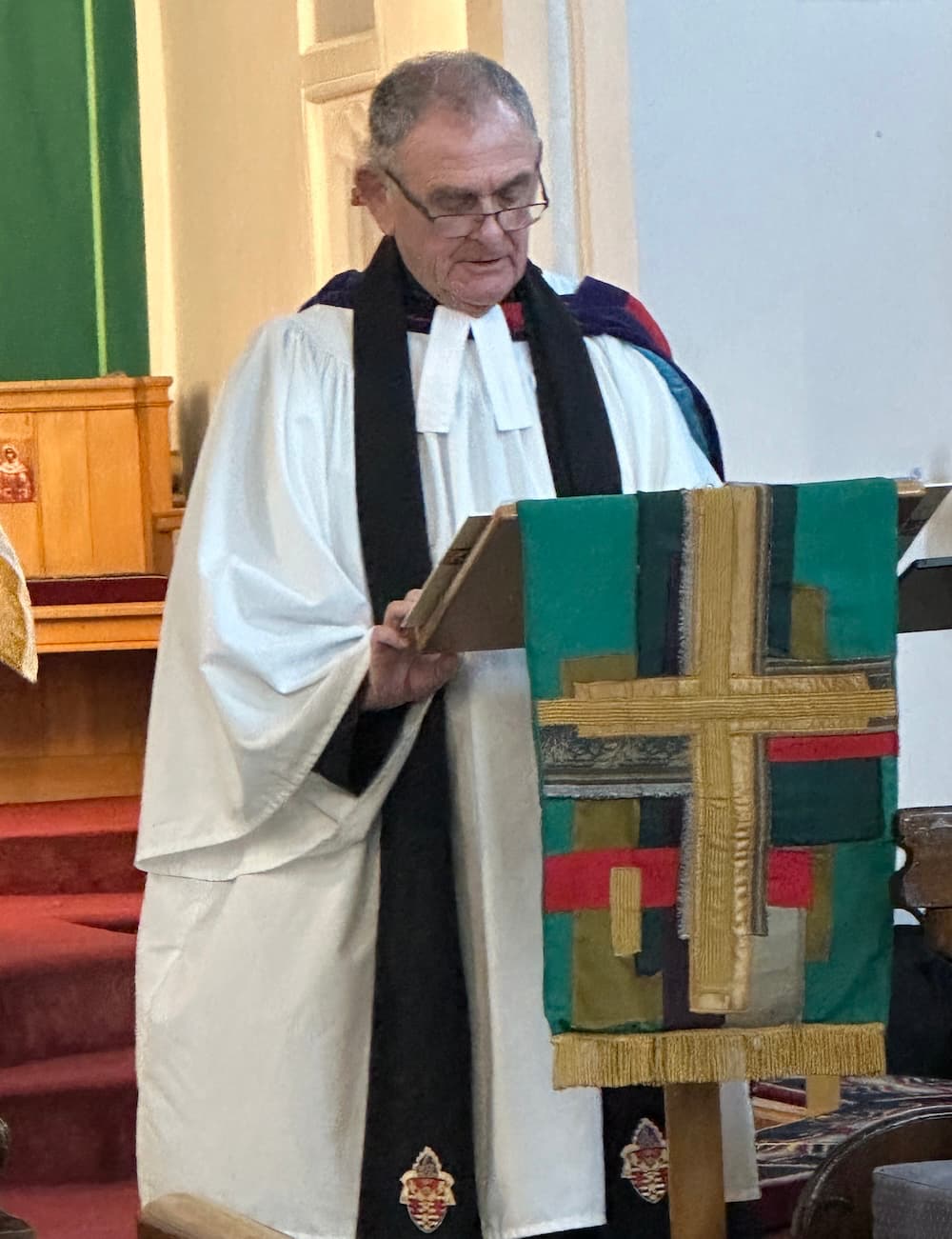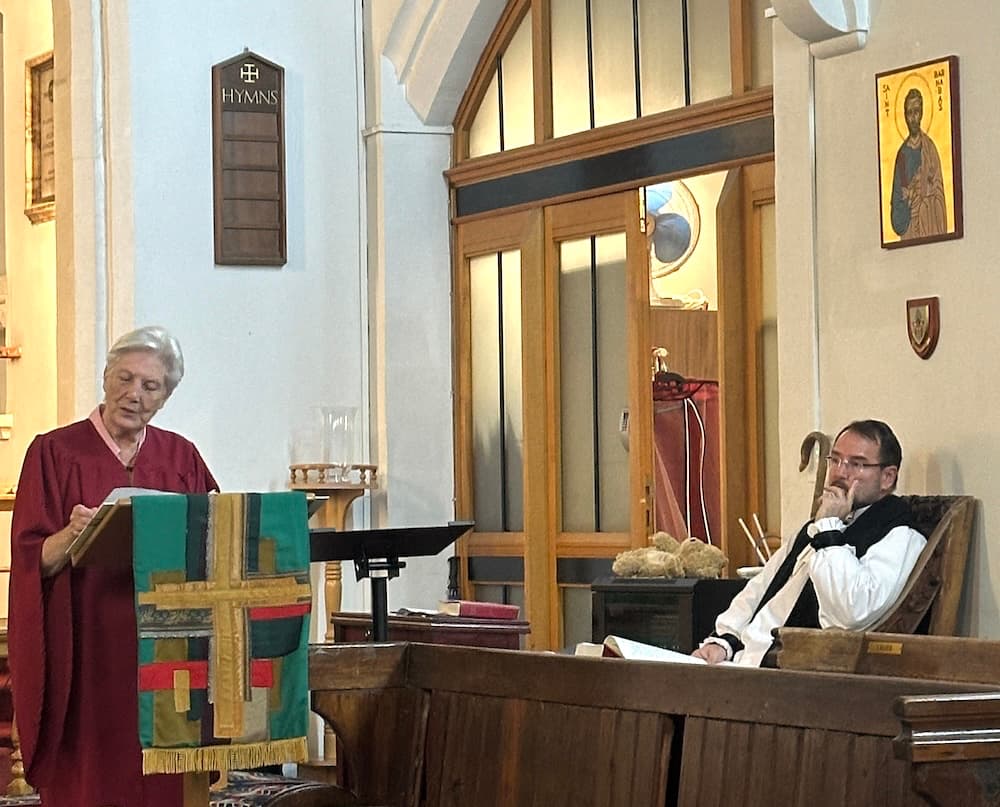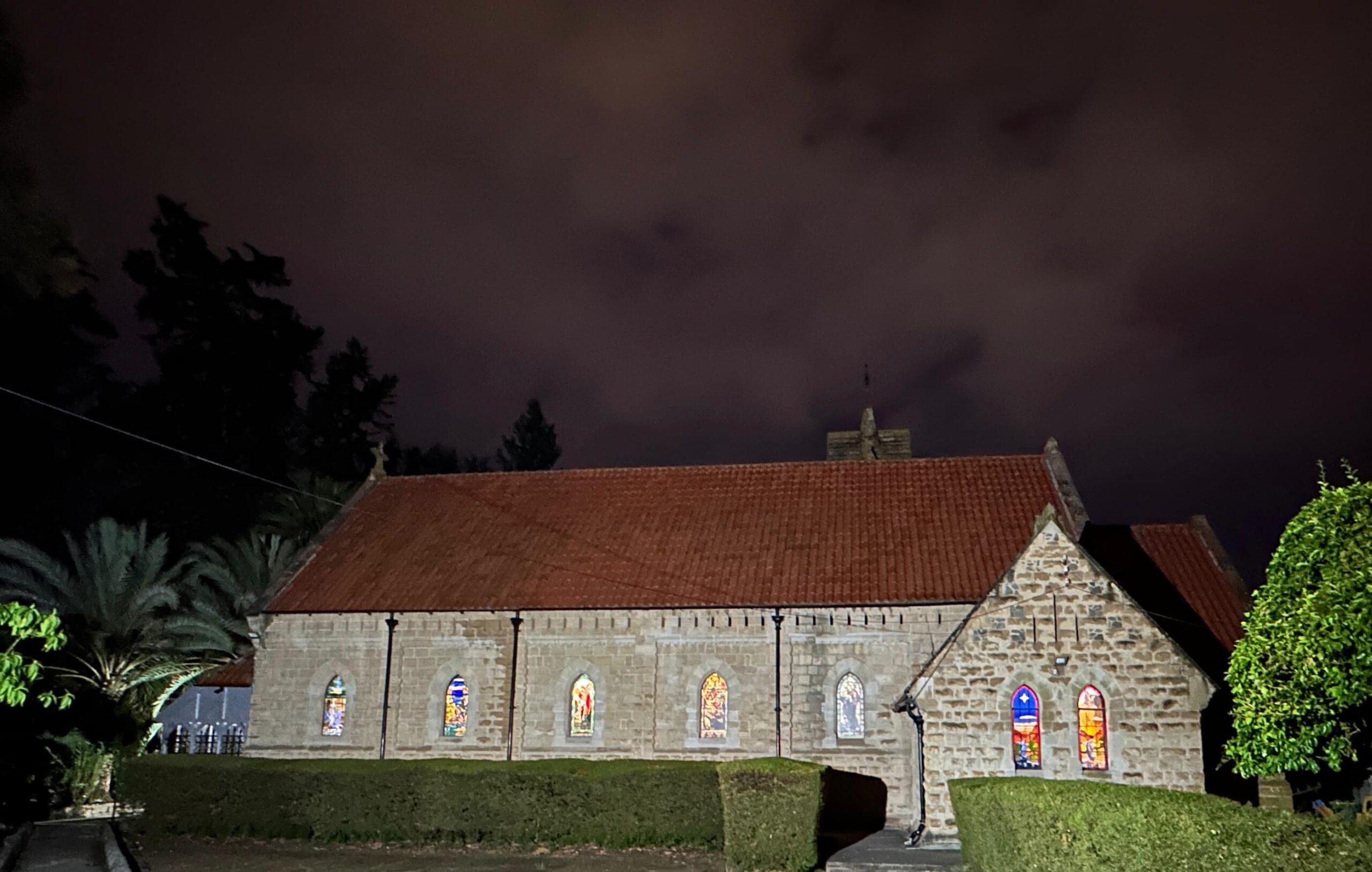
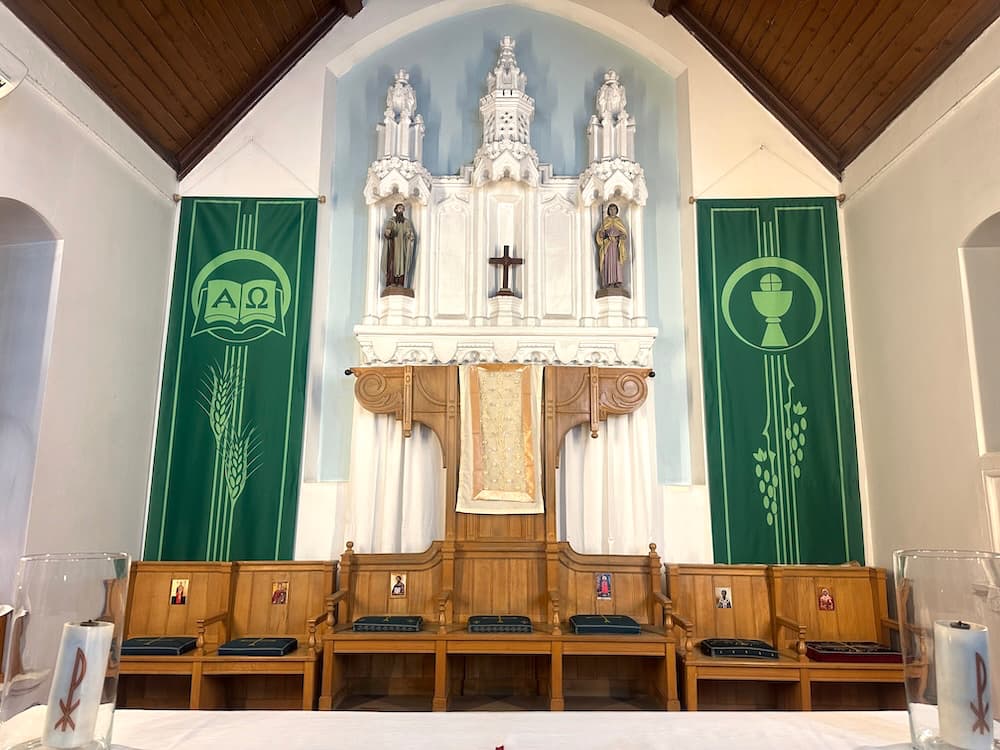
An unusual and historic service in the life of St Paul’s Cathedral, Nicosia this evening, with the dedication of stalls—seats reserved for those leading and helping in services that are also the seats for Canons of the Cathedral.
Bishop Sean described the service as “a small but significant moment in re-envisioning and strengthening the ministry and witness of the Cathedral”.
St Paul’s stalls are in the sedilia behind the altar in the sanctuary. To date, the bishop’s stall—the cathedra, marked by the Diocesan coat of arms—has been in the centre, with three stalls on either side. Because only a bishop should sit in the cathedra, any other president of the Eucharist has been seated off-centre, leaving the central stall empty.
Now there is a cathedra on the south side of the nave—in keeping with other Western and Eastern cathedrals—with the central stall, appropriately, dedicated to St Paul.
At St George’s Cathedral in Jerusalem, the canons’ stalls are named after the hills and mountains of the Holy Land. A Provincial Episcopal Canon of St George’s, Bishop Sean’s stall there is dedicated to Mount Tabor—the mountain of the Transfiguration.
At St Paul’s, six stalls were this evening dedicated to saints connected with Cyprus, chosen by Bishop Sean, Dean Walter and the Cathedral Council.
“To some degree these stalls are ‘seats of honour’,” said Bishop Sean. “But such honour is always grounded in the example of servant leadership given to us by our Lord, who said, ‘So you also, when you have done all that you were ordered to do, say: We are worthless slaves; we have done only what we ought to have done!’”
Drawing on the themes of family and hospitality that lie at the heart of St Paul’s mission and ministry, Bishop Sean declared three stalls to be dedicated “to the family from Bethany who were beloved friends of Jesus—Saints Lazarus, Martha and Mary.
“According to the tradition of the Orthodox Church of Cyprus, St Lazarus came to Cyprus after the resurrection of Christ, became the first bishop of Kition—modern day Larnaca, and was buried there.
“His sister, St Martha is protrayed in Scripture as a woman of profound and forthright faith, and active and practical service. And St Mary is remembered as a devoted disciple who expressed her love for him through an extravagant act of devotion.”
The other three stalls are dedicated to St Helena, St Epiphanius and St John Mark.
“St Helena was the mother of the Roman Emperor Constantine the Great and is remembered for her Christian influence over her son, her pilgrimage to the Holy Land, and her association with the discovery of the True Cross. According to tradition, Helena visited Cyprus on her return from the Holy Land in the fourth century, brought a relic of the True Cross to the island, and established the monastery of Stavrovouni.
“Having half of our stalls dedicated to female saints underscores our belief in and support for the ministry of women in this diocese,” said Bishop Sean.
“St Epiphanius was one of the most influential bishops of the early Church and a major figure in the Christian history of Cyprus. He served as Bishop of Salamis during the fourth century and was known as a theologian, a monastic leader and a defender of Nicene Christianity. St Epiphanius’s long episcopate helped establish Cyprus as a significant centre of Christianity during this time.
The final stall was dedicated to St John Mark, “traditionally thought to be the author of the Gospel of Mark, and a cousin of St Barnabas who was present on the first missionary journey and returned with Barnabas to Cyprus on a second missionary journey.”
Bishop Sean described the service as representing “a moment of renewal and development in the life of this beloved Cathedral. The dedication of these stalls ties us ever more closely to Scripture, to Tradition, and to the exemplary faith of those who have made Christ known on this island.”
The service was an opportunity for Bishop Sean to reflect on the process of selecting, and the honour bestowed upon, Cathedral canons—those clergy and lay people chosen by a bishop and Cathedral dean in recognition of service and ministry to the Diocese and wider Church. And he paid tribute to two canons of St Paul’s who were at the service: Canon Theologian Dr John Holdsworth and Ecumenical Canon Georgia Katsantonis.
A re-envisioned role of Cathedral canon could, he said, see the role develop in the Diocese into one of offering support and advice to the Dean, developing links with Cathedrals in companion dioceses, fundraising and supporting the liturgical and teaching life of the Cathedral.
On 14 November 2026 St Paul’s will celebrate the collation of four new canons of the Cathedral: the Most Reverend Dr Hosam Naoum, the Venerable Dr (Air Vice-Marshal) Giles Legood MBE KHC, Christopher Clapham and Deborah Graham.
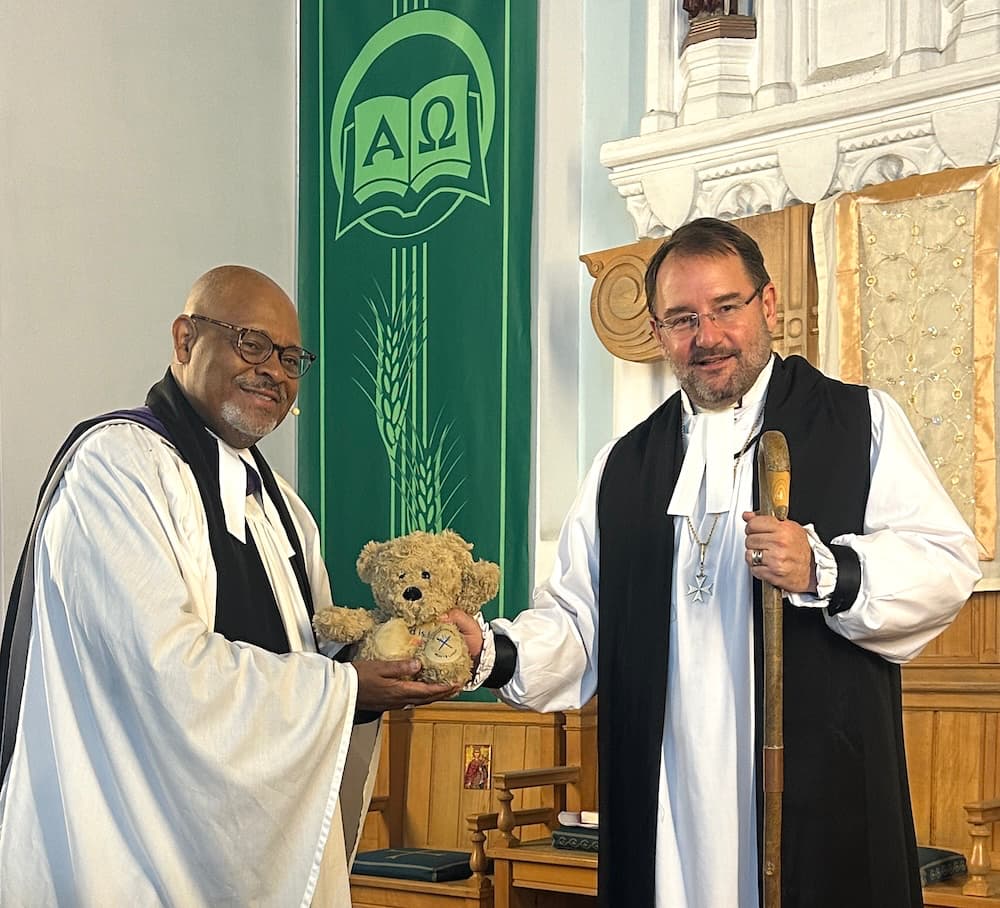
After the service, Bishop Sean presented Dean Walter with a teddy bear—a gift to the Cathedral from Fr Hugh Bearn, chaplain of St Paul’s Anglican Church in Monaco, where Bishop Sean was honoured to preach in June.