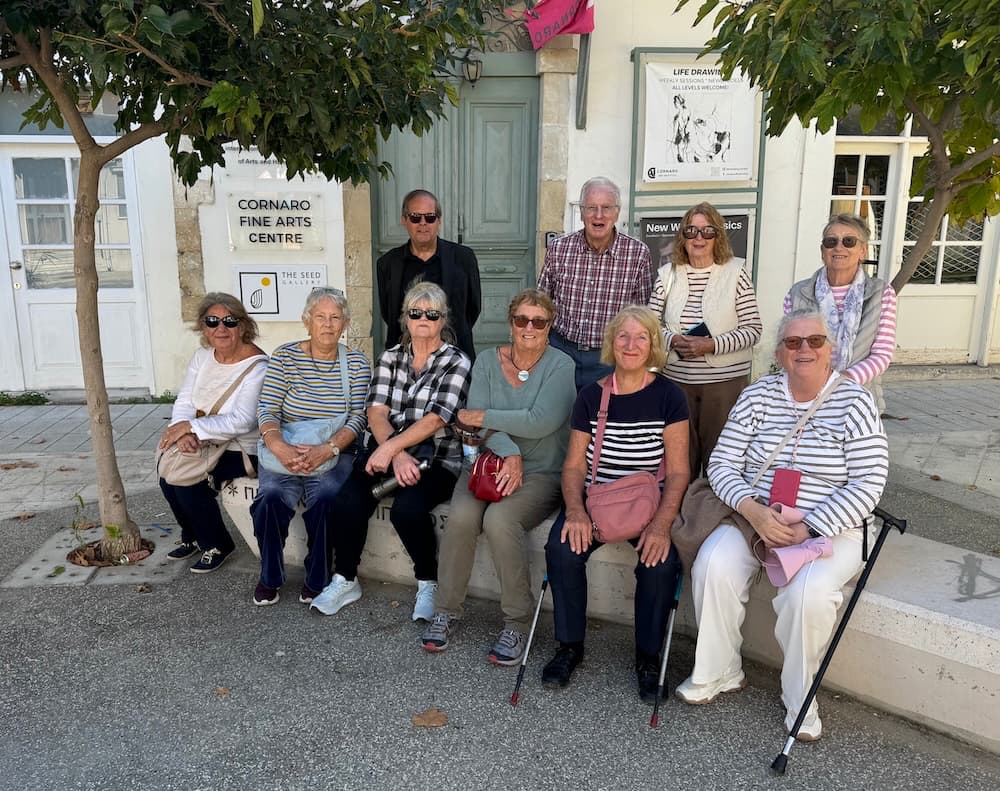
A fascinating tour of Islamic monuments and Turkish-Cypriot heritage sites in the Cypriot city of Limassol today offered a chance to reflect on themes of coexistence and tragedy.
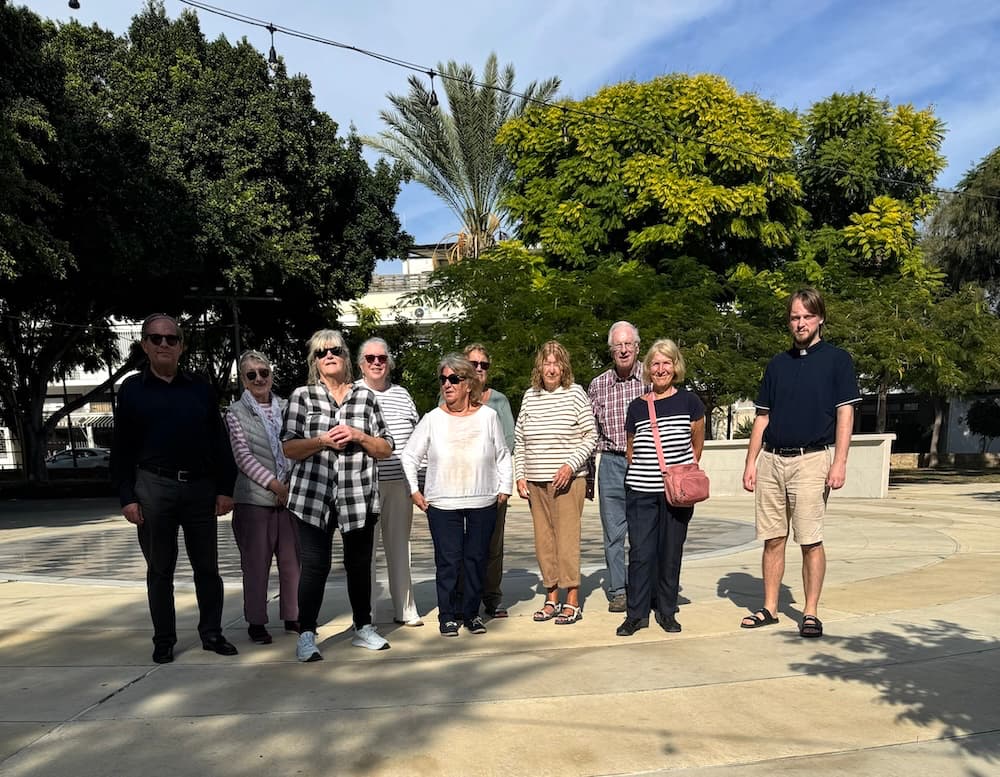
Members and friends of St Barnabas Limassol began their tour at the Old Port, where the Reverend George Vidiakin offered some historical context, recalling that in 1960 Turkish-Cypriots accounted for some 14% of Limassol’s population. Today, Turkish-speaking residents make up around 0.13% of the district’s population. And yet the Ottoman and Turkish-Cypriot presence has left a significant mark on the city’s architectural and cultural landscape.
The tour began at an important site in popular Islamic tradition—the mausoleum of Piri Ali Dede, a Sufi teacher venerated as a protector of children and sailors, whose tomb dates to 1705.
Next was the Grand Mosque, built on the site of an earlier Byzantine church, the foundations of which can still be seen thanks to archaeological excavations. The group then made its way to the New Mosque, reportedly built by a local resident to commemorate the defeat of Napoleon Bonaparte during the siege of Acre, in the course of Napoleon’s Egyptian and Middle Eastern campaign.
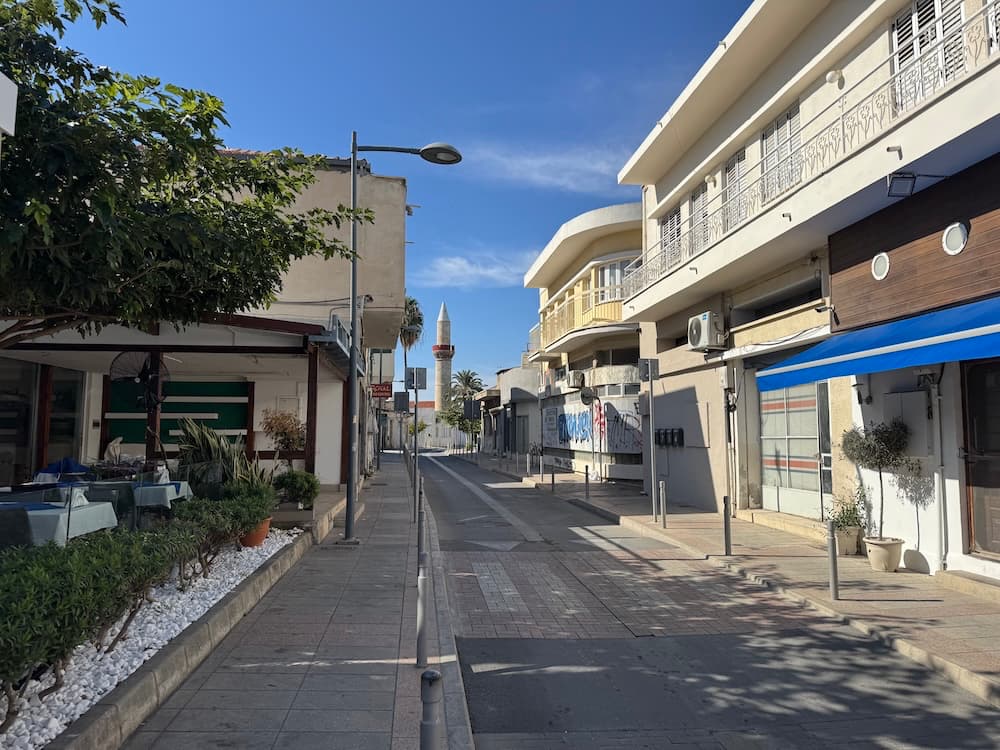
The route continued through Limassol’s former Turkish-Cypriot neighbourhood, where traces of the community that once shaped this part of the city are clearly apparent, including several remarkable historic buildings.
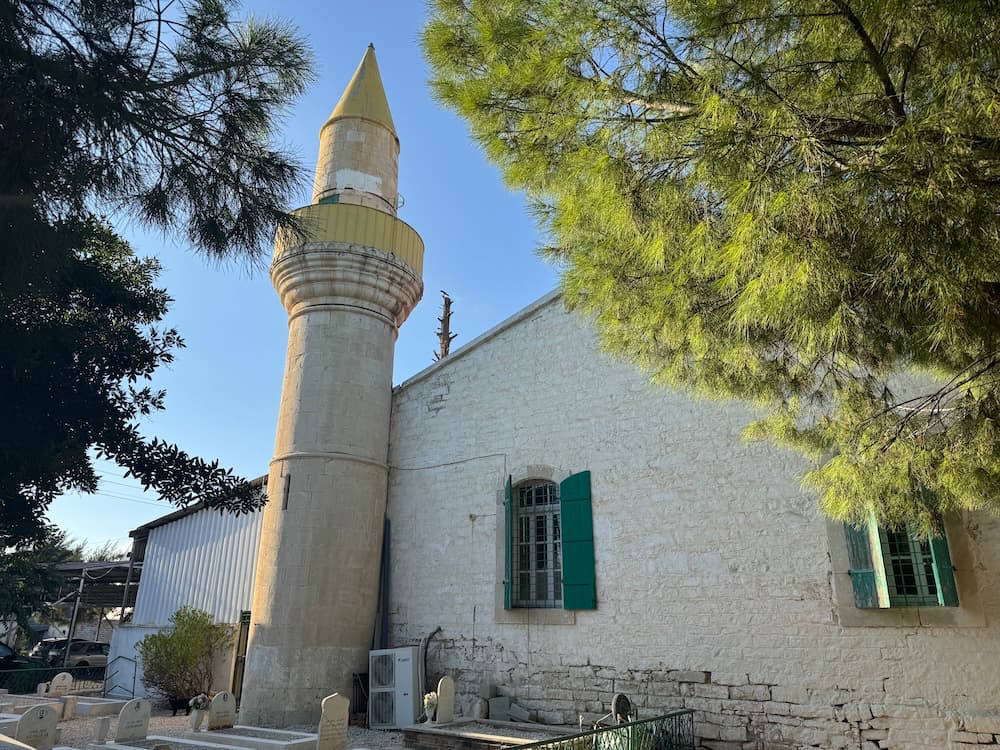
The tour ended at Arnavut Mosque and Martyrs’ Cemetery, where Turkish-Cypriots who lost their lives during the intercommunal violence of February 1964 and the events surrounding the Turkish invasion of July 1974 are commemorated. The cemetery was renovated in 2016.
“The story of these buildings reflects, in many ways, the changing relationship between the two communities on this island,” said Fr George, “beginning with the Ottoman conquest, when existing religious buildings were repurposed and new places of worship were established, and continuing through long periods of everyday coexistence, shared urban life and mutual familiarity, before reaching the tragic episodes of bloodshed, displacement and conflict that marked the 1960s and ‘70s. We pray for reconciliation between the two communities and for a lasting peace in Cyprus.”
Following the walk, participants enjoyed a wonderful meal at the Anagennisi Prosfygon Association restaurant, bringing the afternoon to a close in a spirit of fellowship and shared discovery.